
Internet safety can start with a conversation: What would you do if a message offered a prize? Who could help you check it? What information should stay private?
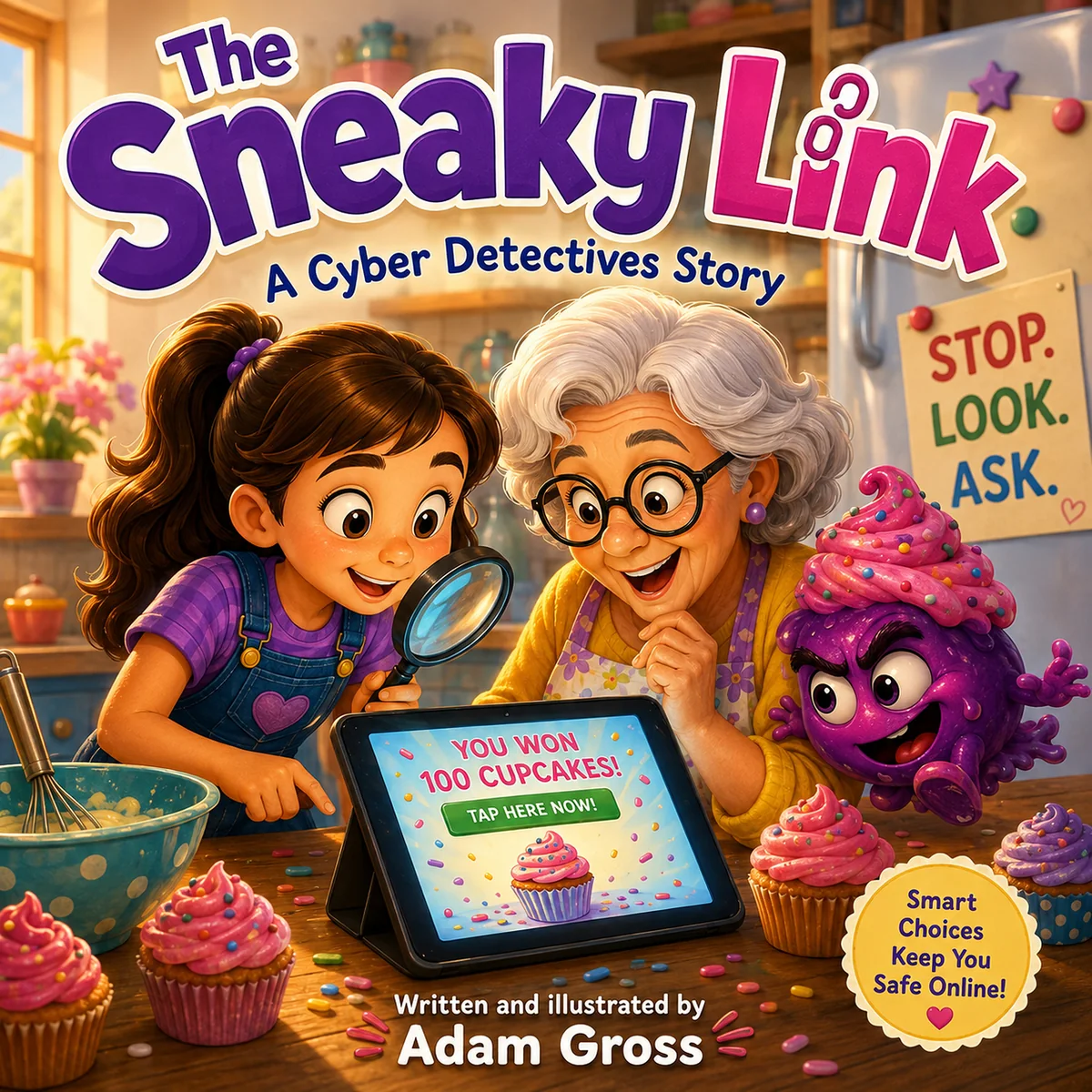
IT MGMT is developing Cyber Detectives, an Educational Series connected to Adam Gross's children's books. Alongside our technology work for businesses and households, we want to help families and educators make safer internet habits part of everyday learning.
The Sneaky Link is available now. The Password Pirate and The Chatty Catfish are available for preorder. We also plan to introduce the books to schools and donate copies to libraries across New York and New Jersey.
Meet the Cyber Detectives books
The series gives us a starting point for educational articles and conversations about using the internet thoughtfully. Here is the current book lineup:
- The Sneaky Link — available now. View the paperback on Amazon.
- The Password Pirate — available for preorder. Preorder the Kindle edition on Amazon.
- The Chatty Catfish — available for preorder. Preorder the Kindle edition on Amazon.
Our accompanying education articles will explore practical questions that parents and children can discuss together: recognizing suspicious messages, protecting account information and asking for help when an online interaction feels confusing.
Start with a small, practical conversation
You do not need to explain every kind of online threat in one sitting. Choose one situation and work through it together. A useful first topic is an unexpected message that asks someone to click a link.
The Federal Trade Commission explains that scam messages can imitate familiar organizations, offer prizes or create pressure to act quickly. Its guidance encourages children to get help from a parent or trusted adult when a message raises questions. FTC guidance on talking to children about text scams.
Try this fictional example on paper, without a working link:
“You unlocked a special game prize! Open this link right now to claim it.”
Ask your child:
- Were you expecting this message?
- What is it asking you to do?
- Is it trying to make you hurry?
- Which trusted adult could help you check it?
The aim is to practice pausing and asking for help. Let the child explain their thinking, then talk through how you would check the claim through a known, trusted source. There is no need to click the message to investigate it.
Connect the lesson to the devices your family uses
Conversations can sit alongside practical device care. For example, the FTC recommends automatic software updates and unique passwords, with adults helping children manage these protections as they learn. Parental controls can also reinforce the habits a family discusses. FTC guidance on protecting children's devices.
A manageable next step is to choose one device together. Check whether updates are enabled, discuss who helps manage its accounts, and agree on whom to ask before responding to an unexpected request. Use pretend examples when discussing passwords; a learning activity should not require a child to reveal a real one.
Our plans for schools and libraries in New York and New Jersey
We want these conversations to reach beyond the families who find our website. IT MGMT plans to introduce Cyber Detectives to schools and donate copies to libraries across New York and New Jersey, supporting opportunities for children to learn about safer internet habits.
This is a developing initiative. We will share confirmed school and library activities as they happen, including what was provided and how the books were used. For now, the goal is to make the series part of useful conversations among children and the adults who support them.
If you represent a school or library and would like to discuss the books, contact IT MGMT and mention Cyber Detectives and your organization.
Keep the conversation going at home
Start with one question after reading, playing a game or using a device together: “Was there anything online today you weren't sure about?” That can give your family a concrete situation to discuss next.
For adults who also need help with their household technology, explore IT MGMT's Home IT services or book a Home IT conversation. We can discuss your home network and support needs while you keep building the everyday habits that matter to your family.